Introduction
In India, hiring moves fast, recruiters often need to fill a role in 1 to 3 days, and candidates expect to hear from someone directly. But LinkedIn's core outreach tools (InMail, email) are asynchronous.
By the time a recruiter heard back, the candidate had already joined elsewhere. The live conversation, the thing that actually moves a hire forward, was leaking off-platform to cold calls, WhatsApp,
and tools LinkedIn didn't own.
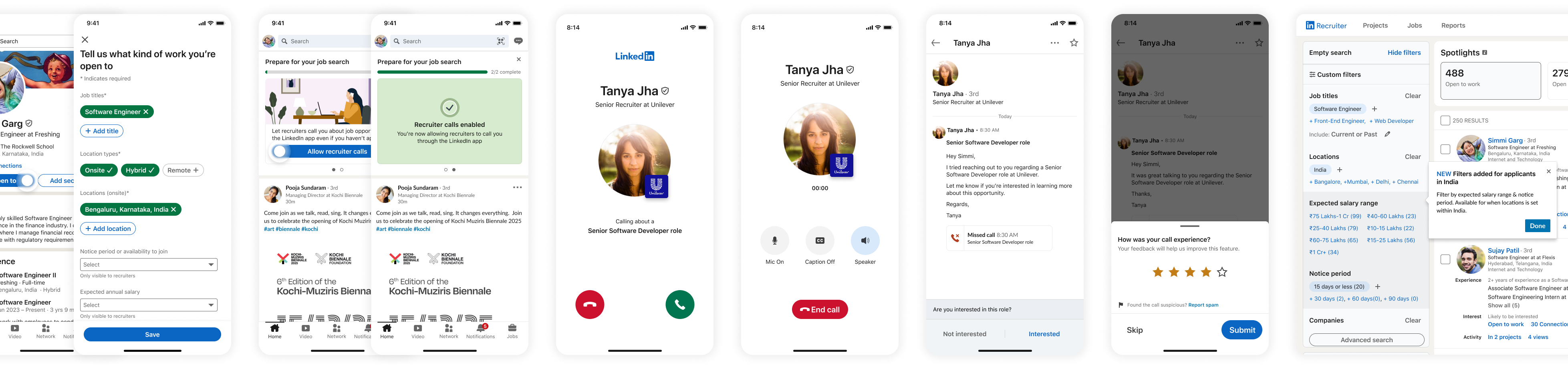
Recruiter calling lets recruiters call opted-in candidates directly from the platform, through a built-in calling experience,
no phone numbers exchanged. Candidates choose to opt in, see who's calling and for what role before they pick up.
Alongside calling, we also introduced two new candidate attributes - notice period and expected salary, so recruiters could filter for candidates within budget,
before ever picking up the phone. Together, these two solutions formed LinkedIn's answer to a core challenge:
how do you make hiring faster, without making it feel cold?
Role and Impact
On the calling side, I designed the opt-in experience that brought 8.5 million candidates onto the platform as callable, the in-call experience with
contextual identity cues and the post-call workflow that kept recruiters in their pipeline without switching tools.
I also worked on the trust and safety layer — ensuring seekers felt in control at every step.
For the filtering attributes, I shaped the experience for candidates to share their availability and salary expectations through the "Open to Work" flow, and surfaced these as actionable filters
to recruiters directly. Early results showed a significant improvement in job applications post-call compared to InMail outreach, a 4.33 rating out of 5 from candidates who received calls,
and over 6,000 calls initiated in the pilot phase.